

September 3, 2026
•
14
min read

Lovable SEO: How to Optimize a Lovable Website for Search in 2026
Lovable SEO in 2026: learn how SSR, prerendering, Search Console, metadata, indexing, and content work together to improve search visibility.
Most Lovable SEO advice you’ll find right now is describing a version of Lovable that no longer exists. It assumes every Lovable site is a client-side React app that Google can’t read, and that you need an outside prerendering service just to get indexed. That was an accurate description of Lovable before its May 2026 rendering changes. It isn’t anymore.
If you own, build, or market a Lovable website and you’re trying to figure out whether Lovable is SEO-friendly, how to optimize it, why your pages aren’t showing up, or what actually changed this year, this guide is built for the platform and Google Search as they stand in September 2026.
Is Lovable Good for SEO?
Yes. A Lovable site can rank as well as any other modern website, and the rendering problem that used to hold it back has largely been solved on Lovable’s own hosting. What you get out of it still comes down to the quality of the pages you publish. If you’re new to the platform, our introduction to Lovable AI is a quick primer on how it builds apps.
The old worry was real. Client-side rendered apps hand the browser a near-empty shell and build the page with JavaScript after load. Google can execute JavaScript, but it renders in a separate, later pass from crawling, which can slow down or complicate indexing, and many social and AI crawlers don’t run JavaScript at all.
Lovable changed the default so that’s no longer the starting point for new projects. The platform now leans on server rendering and pre-rendering to make sure the machines that read your site get real HTML. That removes the technical barrier. It doesn’t write your titles, match search intent, or earn your backlinks. Being “SEO-friendly” means the door is open. Walking through it is still work.
What Changed for Lovable SEO in 2026?
Lovable moved to a server-rendering foundation and gave older projects a way to catch up. New projects render on the server, most older projects get pre-rendering for crawlers, and eligible older projects can be upgraded in place.
Here’s the part a lot of guides miss: there isn’t one Lovable rendering model anymore. There are a few, and which one you’re on decides what Google and AI crawlers actually see.
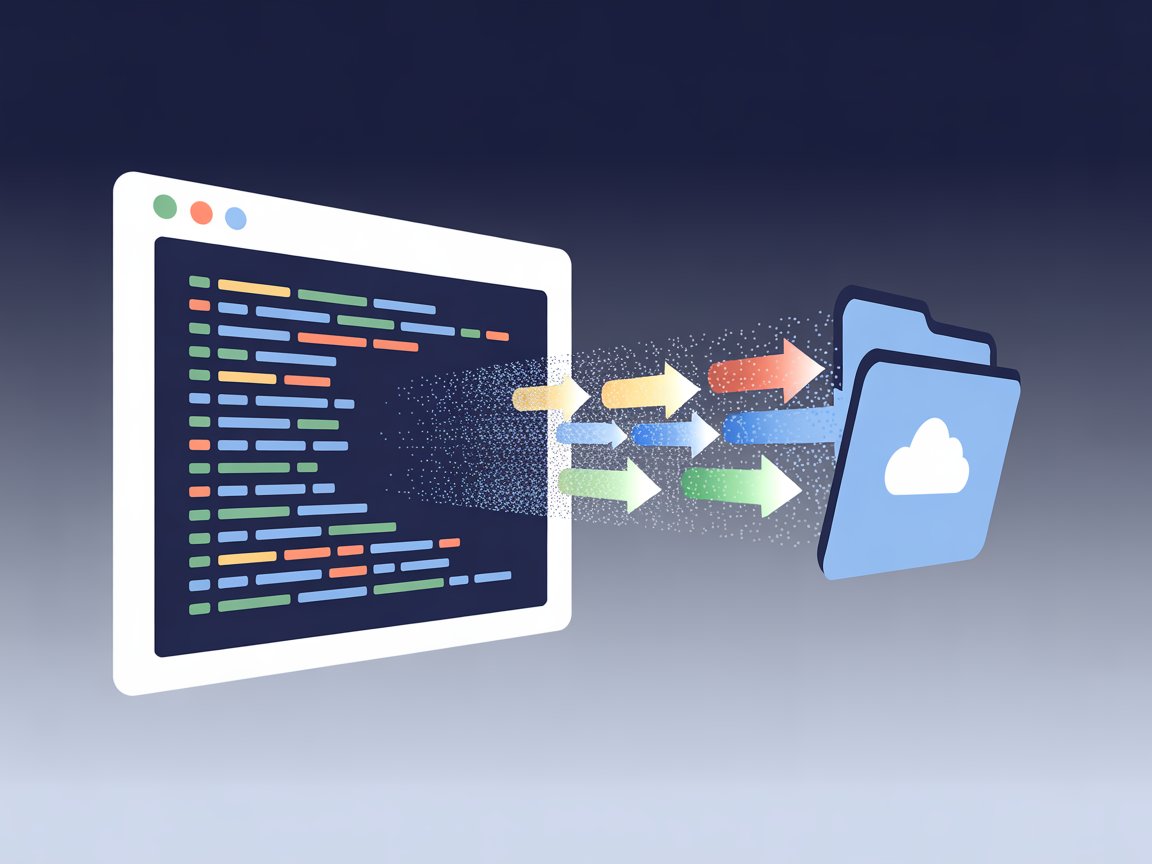
New projects use TanStack Start, a full-stack React framework with built-in server-side rendering. TanStack Start became the default for new Lovable projects on May 13, 2026, and for new Enterprise projects on June 22, 2026. With SSR, each page is rendered into complete HTML on the server before it’s sent, so visitors, search engines, AI crawlers, and link-preview bots all receive the same finished page.
Older projects built on the previous React + Vite stack still exist, and they’re handled differently. On Lovable hosting, those apps serve pre-rendered copies of published pages to verified crawlers on request, so search engines, social-preview bots, and AI engines like ChatGPT, Perplexity, Claude, and Gemini can read the content even though human visitors still get the client-rendered app. Pre-rendering runs at request time, so dynamically loaded content is included. Unverified tools, including third-party SEO scanners, see the regular single-page app instead.
If you’re on an older React + Vite project, you may not be stuck on it. Eligible projects can be upgraded in place to TanStack Start. The upgrade runs inside your existing project, uses credits, inventories your pages, preserves protected routes, and leaves your published site unchanged until you publish again. Lovable may suggest the upgrade when you ask about a symptom that points to rendering, like blank link previews or a page that won’t appear in search, and it won’t start without your confirmation. Check eligibility, permissions, and cost before you begin.
The practical takeaway: for Lovable-hosted projects, an external prerendering service is no longer an automatic requirement. That’s the single biggest thing outdated guides get wrong.
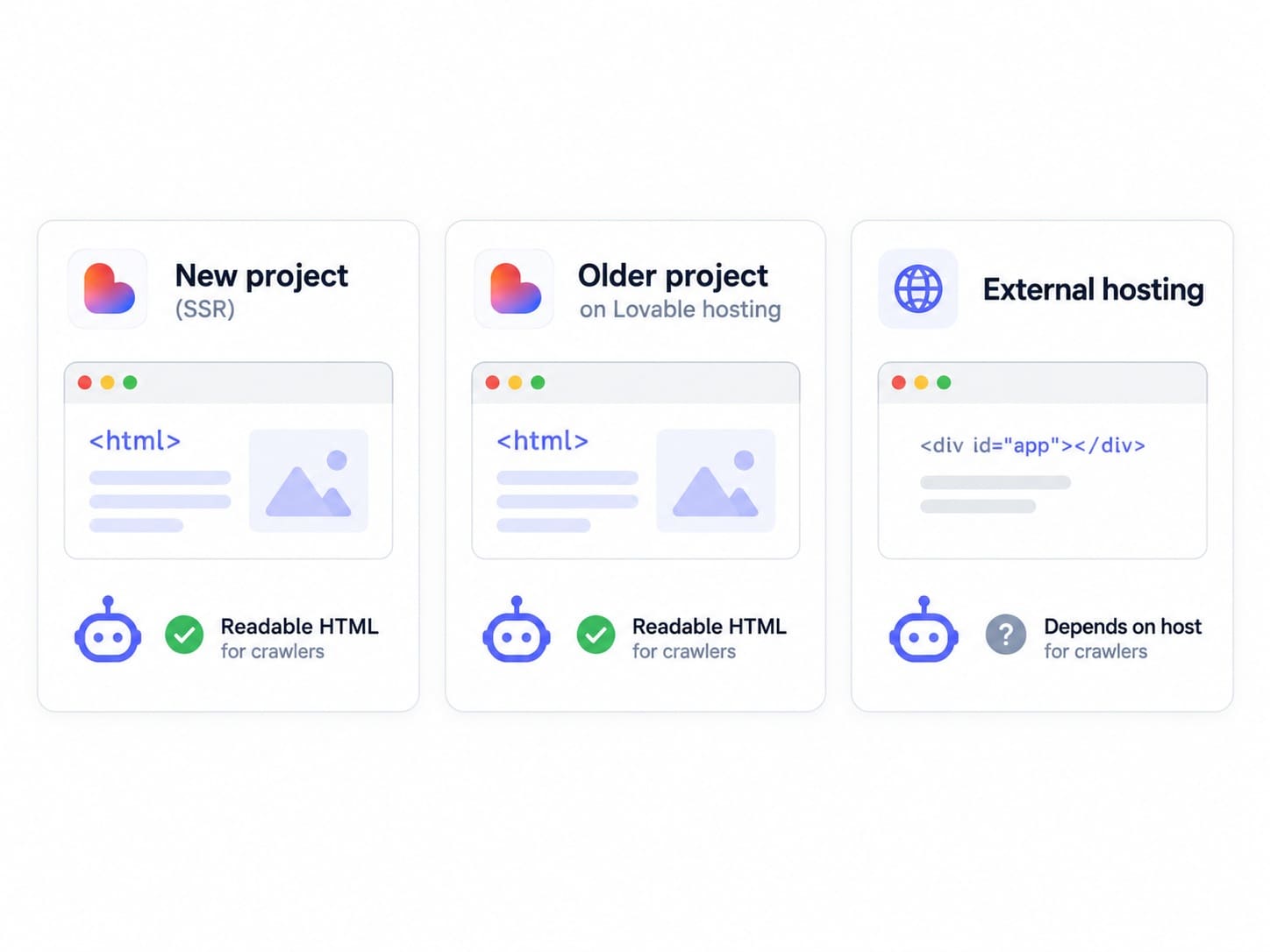
Which Lovable rendering setup do you have?
If you export a Lovable project and host it somewhere else, Lovable’s pre-rendering and SSR guarantees don’t travel with it. You own the crawlability of that deployment, and you’re responsible for checking what crawlers receive.
Does Server Rendering Alone Get You Ranked?
No. Rendering decides whether Google can read and index your pages. It has almost nothing to do with where those pages rank. Those are two different jobs, and confusing them is why some people “fix SSR” and then wonder why traffic didn’t move.
Think of it as a sequence. First, a crawler has to reach your page and get usable HTML. Server rendering or pre-rendering handles that. Second, Google decides whether to include the page in its index. Third, when someone searches, Google decides how your page stacks up against everything else competing for that query.
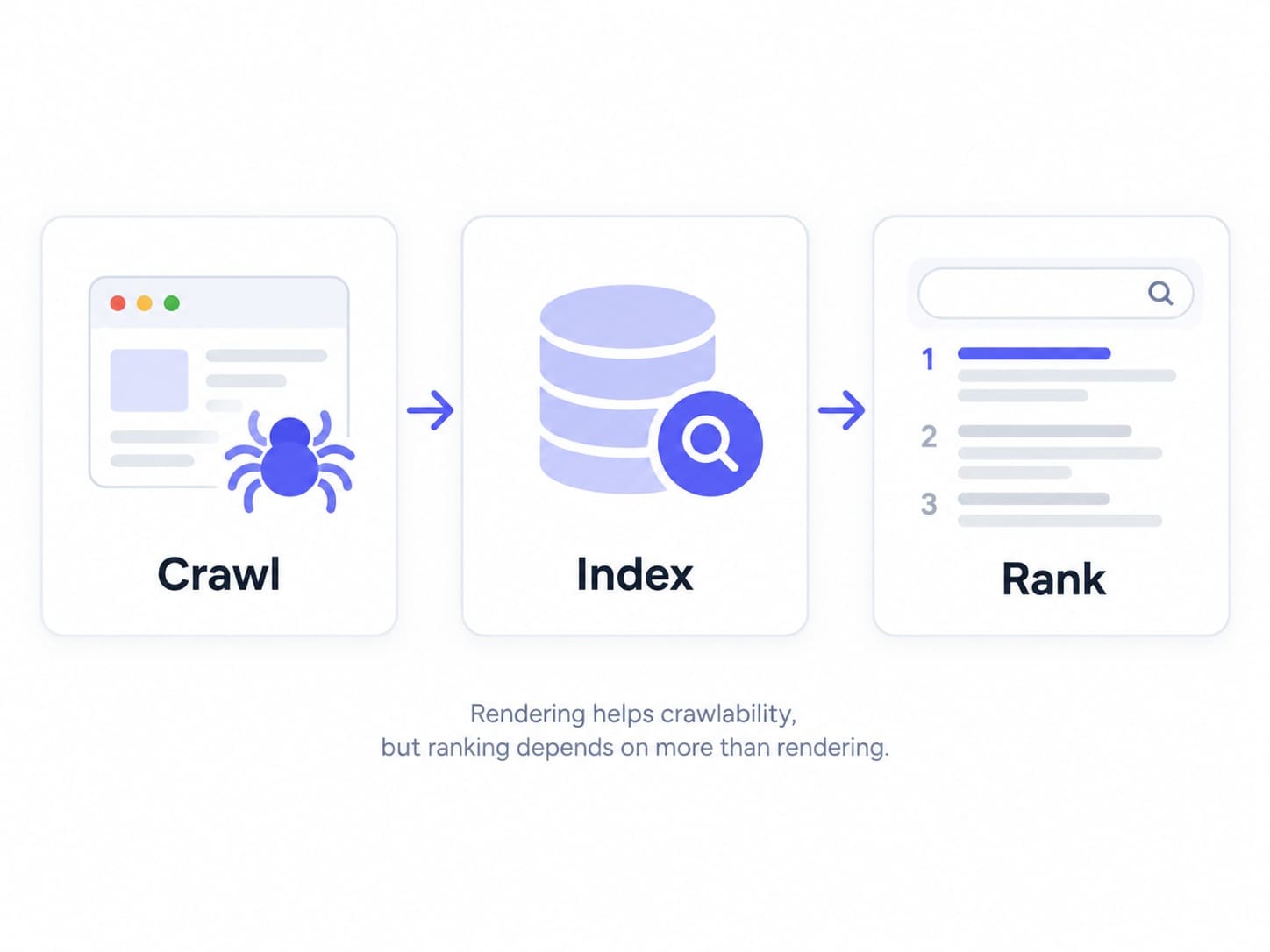
Server rendering only helps the first two steps, and only clears a blocker at that. The third step, ranking, runs on search intent, content depth, unique value, metadata, internal links, page speed, mobile usability, and the authority you’ve built through quality and backlinks. A perfectly rendered page with thin content and no authority still loses to a stronger competitor.
So treat rendering as the price of admission. Once you’ve paid it, the SEO work is the same as it would be on any platform.
How do You Optimize a Lovable Website For Search, Step by Step?
Start by confirming what stack and hosting you’re on, verify what Google actually sees, then fix the highest-impact issues in order. Lovable includes tools for most of this, but the judgment calls are yours.
Here’s a workflow that holds up regardless of which Lovable setup you have.
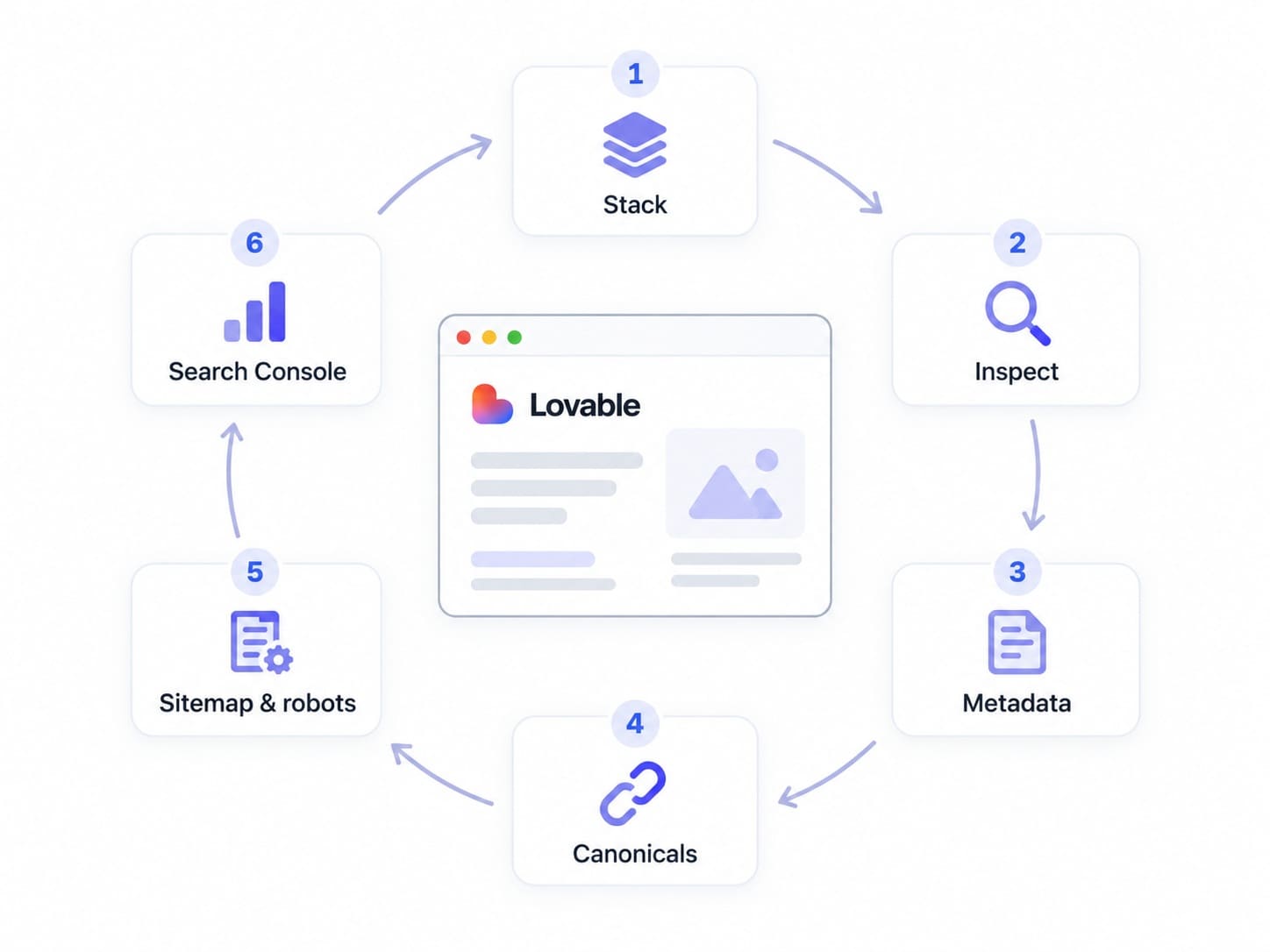
- Identify your stack and hosting. Are you on a new TanStack Start project, an older React + Vite project on Lovable hosting, an upgraded project, or an externally hosted export? Every decision after this depends on the answer. A project created from mid-May 2026 onward is almost certainly TanStack Start.
- Verify what Google sees, not what your browser shows. For older Vite projects especially, don’t rely on “View Source.” A blank shell there doesn’t prove Googlebot sees a blank page, because Lovable serves pre-rendered HTML to verified crawlers. Use the URL Inspection tool in Google Search Console instead. It shows you the rendered HTML Google actually processed for a specific URL, which is the answer that matters.
- Run Lovable’s SEO and AI search review. You’ll find it under More → SEO & AI search in the project toolbar. The review audits what Lovable can detect in your code and deployment: page basics, metadata, Open Graph tags, canonical tags, robots.txt, sitemap, structured data, semantic HTML and content structure, alt text, indexing, AI readiness, and Google Search Console setup. It flags issues and can apply most fixes in one click. It does not measure page speed, accessibility, or mobile usability, since Lovable moved those out of the review, so run Google PageSpeed Insights on your published URL for performance and accessibility.
- Write real titles and meta descriptions, one set per page. Give every page a unique, descriptive title and meta description that match what someone is actually searching for. This is intent work, not a character-count exercise. Generic or duplicated metadata is one of the most common reasons a technically fine Lovable site underperforms.
- Get canonicals pointing at the right domain. Every page should have a self-referencing canonical tag that points to your production domain, not the temporary *.lovable.app preview URL. A canonical aimed at the wrong domain is a quiet way to keep your real pages out of the index.
- Publish an accurate sitemap and a sane robots.txt. Your sitemap should list real production URLs only. Generating it by hand can go wrong, since AI can invent routes that don’t exist, so build it from your actual route tree and keep it current. If you’d rather prompt Lovable to generate SEO elements directly, specific instructions cut down on hallucinated output, and our Lovable prompting guide has patterns that help. Your robots.txt should allow crawling of the resources Google needs and point to the sitemap.
- Connect Google Search Console and submit your sitemap. Lovable integrates with Search Console and can handle verification and sitemap submission from chat once the connector is enabled. After it’s connected, Search Console becomes your source of truth for indexing and coverage, far more reliable than guessing from the front end.
- Structure content for people first and machines second. Use clear headings and semantic HTML, answer specific questions directly, and keep the facts that matter inside the page HTML rather than hidden behind interactions. This is what both search engines and AI answer engines reward. Content-driven sites like blogs live or die on this, so if you’re building one, our Lovable blog builder tutorial walks through how the content layer comes together.
- Research intent and competitors before you write more pages. Lovable includes Semrush-powered SEO research for keyword, competitor, ranking, backlink, and content work. Use it to find the terms real people use and the gaps competitors leave open, then build pages that deserve to rank rather than pages that just exist.
- Treat authority and freshness as ongoing. Internal links, backlinks from credible sources, and refreshing content that’s slipping all compound over time. No single audit produces this. It’s the part of SEO that never really finishes.
One honest caveat about the built-in review: passing it is good hygiene, not a ranking guarantee. Lovable’s own documentation is clear that clearing the technical checks doesn’t replace search-intent research, high-quality content, backlinks, authority, competitor analysis, or a broader strategy. The review keeps you from shooting yourself in the foot. It doesn’t win the race for you.
Why is My Lovable Website Not Indexing?
Usually it’s one of a handful of concrete causes: a page blocked from indexing, a canonical or sitemap pointing at the wrong URLs, content too thin for Google to bother with, an external host serving an empty shell, or simply a new page Google hasn’t gotten to yet. Verify the cause in Search Console before you change anything.
Work through these in order:
- Check for an accidental noindex or a blocking robots.txt rule. A stray noindex meta tag or a robots rule that blocks the wrong paths will keep pages out of the index no matter how good they are. This is the first thing to rule out.
- Check your canonicals. If pages canonicalize to the preview domain or all point at the homepage, Google may drop the versions you actually want indexed. Point every canonical at the correct production URL.
- Check your sitemap for fake or stale URLs. A sitemap full of URLs that 404 or redirect erodes trust in the whole file. Keep it to live production pages, generated from your real routes.
- Confirm what crawlers receive. On an externally hosted plain SPA, crawlers may genuinely be getting a blank shell, and that’s a real rendering problem you need to solve at the host or build level. On Lovable hosting, verify with Search Console’s URL Inspection rather than assuming from View Source, because pre-rendering is served to verified crawlers.
- Rule out thin, duplicate, or low-value pages. Google doesn’t have to index every page. Near-empty pages, boilerplate, or many pages saying the same thing can simply be passed over, even when nothing is technically broken.
- Give new pages time, then request indexing. Fresh URLs aren’t instant. Submit the page in Search Console and check the coverage report over the following days instead of refreshing Google every hour.
If you’re on an older Vite project and the diagnosis really does come back to rendering, and your project is eligible, the in-place upgrade to TanStack Start is the direct fix, and it’s usually a better use of time than bolting on an external prerenderer for a Lovable-hosted site.
Indexing vs Ranking: What’s The Difference?
Indexing means Google has selected your URL for inclusion in its search index and made it eligible to appear in results. Ranking is the separate process of deciding where that indexed page shows up for a particular query. Being indexed is the entry ticket. Ranking is the competition once you’re inside.
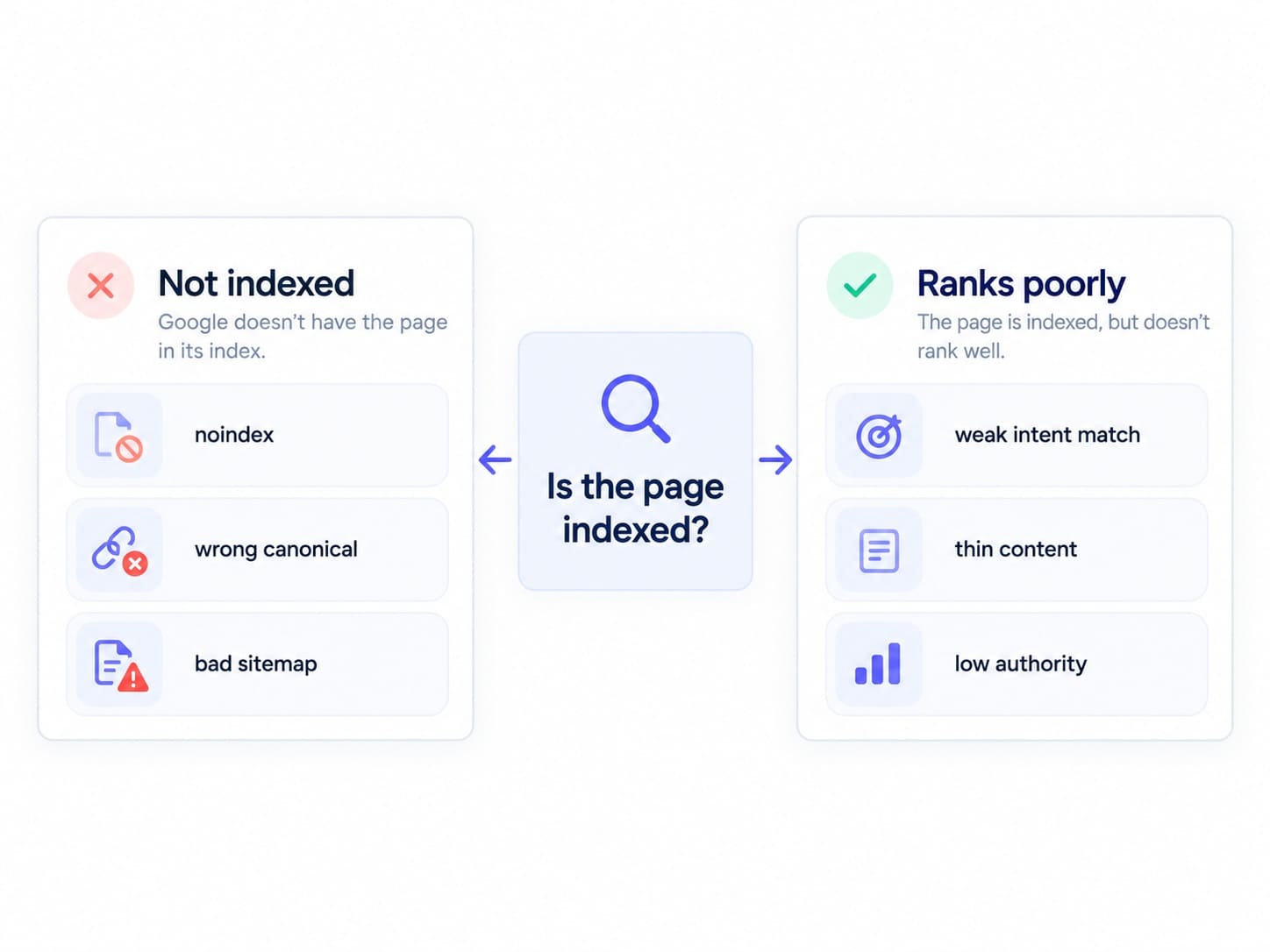
The distinction changes what you fix.
If a page isn’t indexed, a technical block is one possible cause: a noindex tag, a robots rule, a broken render, or a canonical pointing elsewhere. But it isn’t the only cause. Google also chooses not to index pages it treats as duplicates, thin or low-value content, weaker versions of a canonicalized alternative, or URLs it simply doesn’t consider useful enough to store. A technically clean page can still be left out if Google doesn’t think it adds anything.
If a page is indexed but stuck on page three, the problem is competitive rather than technical: search intent, content quality, relevance, authority, and links.
People burn time solving the wrong one. Re-verifying your sitemap won’t lift a page that’s already indexed, and no amount of writing will rank a page Google has declined to index in the first place. Confirm which situation you’re in first, in Search Console, then put your effort there.
How Do You Optimize a Lovable Site For AI Search (AEO)?
The same way you optimize for regular search. Google’s current guidance treats answer-engine and generative-engine optimization as part of SEO, not a separate discipline, and Lovable’s documentation points at the same foundations. There’s no special file or schema that unlocks AI visibility.
For Google’s generative AI features, the same Search index and core ranking systems still apply. In practice, a page generally needs to be indexed and eligible to appear in Search before it can be considered for AI-generated results, so there’s no separate AI funnel that bypasses ordinary SEO.
What actually helps is unglamorous: crawlable HTML, clear semantic structure, descriptive metadata, genuinely useful content, direct answers to real questions, factual accuracy, clear entity names instead of vague pronouns, and links pointing to your site. Lovable also serves a clean Markdown version of published pages to AI crawlers, which helps them read your content, but that’s a convenience on top of the fundamentals, not a substitute for them.
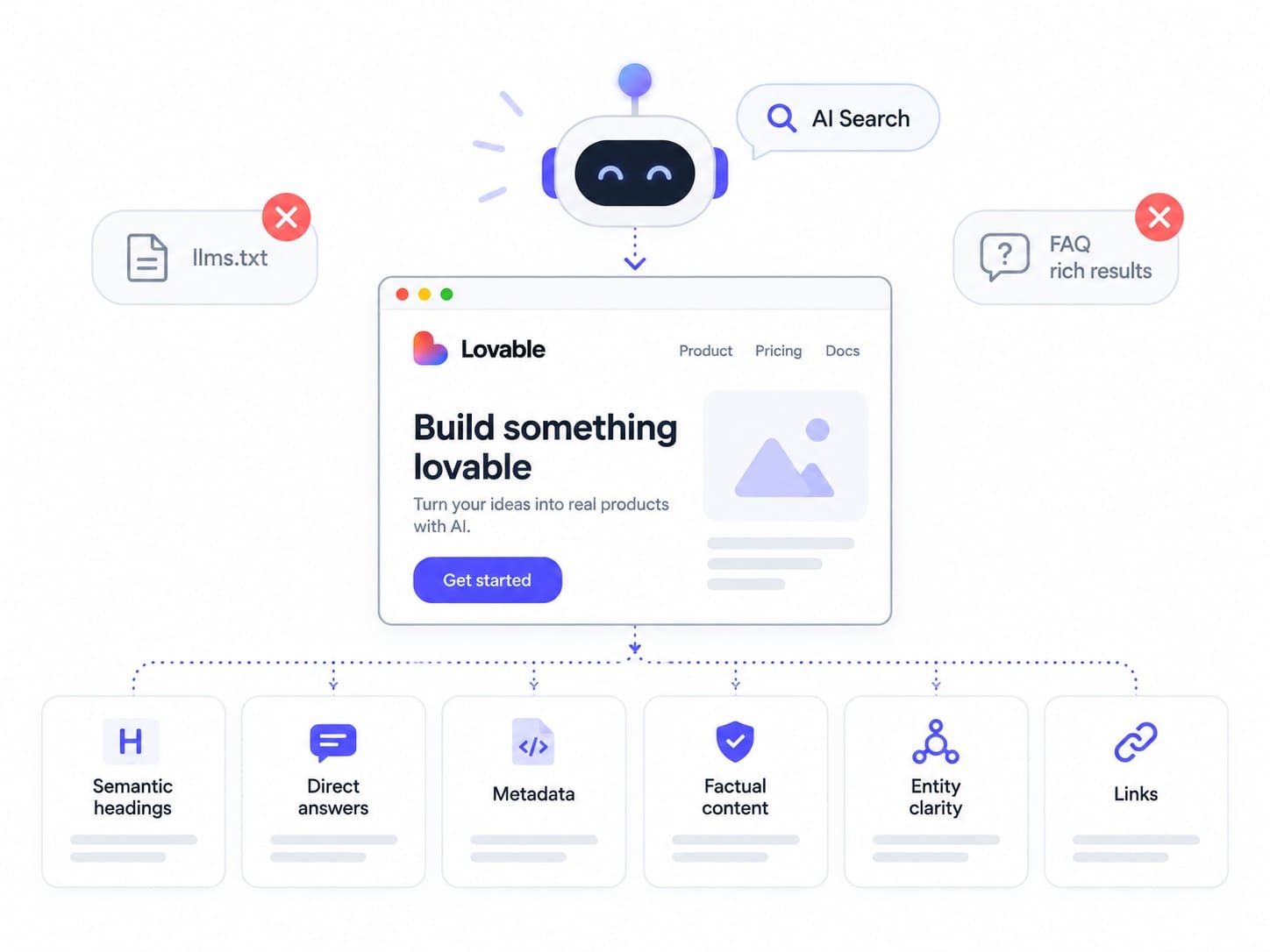
Two myths are worth putting down directly, because outdated guides still push them:
- llms.txt is not required and won’t move your rankings. Lovable’s documentation states plainly that Lovable doesn’t require llms.txt and that its SEO and AI search review doesn’t treat a missing file as a problem. Google says the same from its side: it may discover an llms.txt file, but it treats the file like any other and gives it no special indexing or ranking pathway. Add one if you have a specific reason, but don’t treat it as an AEO requirement.
- FAQ schema no longer produces FAQ rich results. Google’s documentation notes that FAQ rich results stopped appearing in Search as of May 7, 2026. FAQPage is still a valid Schema.org type and it won’t hurt you to keep it where it honestly matches visible content, but it will not generate the expandable Q&A snippet in Search anymore. Don’t add FAQ markup expecting that reward. Lovable’s own review reflects this too: it doesn’t flag a missing FAQPage as a problem.
The useful mental model: write pages a knowledgeable human would find complete and trustworthy, keep the key facts in the HTML, and make the structure obvious. That serves Google, AI answer engines, and your readers at the same time.
Frequently Asked Questions
Do I need Prerender.io or another external prerendering service for a Lovable site?
For a Lovable-hosted project, usually no. New projects render on the server, and older React + Vite projects get on-request pre-rendering for verified crawlers. External prerendering mainly matters when you host a plain client-rendered SPA somewhere else and have to solve crawlability yourself.
Can an older Lovable project move to server-side rendering?
Eligible older React + Vite projects can be upgraded in place to TanStack Start, which gives them full server-side rendering. The upgrade runs inside your existing project, uses credits, and leaves your published site unchanged until you publish again. Check eligibility, permissions, and cost first. If you stay on React + Vite, the project keeps getting pre-rendering for verified crawlers.
Does passing Lovable’s SEO and AI search review mean I’ll rank?
No. The review checks technical foundations like metadata, canonicals, robots.txt, sitemap, structured data, indexing, and content structure. It can’t supply search-intent research, content quality, backlinks, or authority, and Lovable says as much in its own documentation.
Does the SEO review check page speed and accessibility?
Not anymore. Lovable removed the Lighthouse-style checks, so the review no longer reports page speed, accessibility, or mobile usability. Run Google PageSpeed Insights on your published URL for those, then act on what it flags.
My Lovable site shows a blank page in View Source. Is that a problem?
Not necessarily, if you’re on Lovable hosting. Pre-rendered HTML is served to verified crawlers, so an empty View Source in your browser doesn’t prove Googlebot sees nothing. Check the URL with Search Console’s URL Inspection tool to see what Google actually rendered.
Should I add an llms.txt file to improve AI visibility?
It’s optional and it won’t improve your Google or AI-search rankings. Both Lovable and Google have said it isn’t needed. Your effort is better spent on crawlable content, clear structure, and authority.
What’s the fastest thing I can check if traffic is flat?
Open Search Console and separate the two questions: are the pages indexed, and if so, where do they rank? That single split tells you whether you have a technical problem or a content-and-authority problem, and it stops you from fixing the wrong one.
Where to start if you’re stuck
If your Lovable site isn’t indexing or isn’t ranking, resist the urge to rebuild. Start smaller.
Figure out which stack and hosting setup you actually have. Verify what Google sees with Search Console instead of trusting your browser. Then isolate the single most concrete bottleneck in front of you, whether that’s a bad canonical, a hand-built sitemap full of invented URLs, an eligible older project that would benefit from the TanStack Start upgrade, or a set of pages that simply aren’t good enough yet to rank.
Most Lovable SEO problems in 2026 are narrower than they look. Diagnose precisely, fix one real thing, and measure before you decide the platform is the problem. If you reach the point where the bottleneck is genuinely architectural and you’d rather hand it off, that’s a reasonable moment to bring in help, but it’s rarely the first move.
Working with a partner on Lovable SEO
Most of what’s above you can do yourself, and for a lot of sites that’s the right call. But if the diagnosis points to something bigger — a stack migration on a large project, a rendering problem on a self-hosted export, or a content and authority gap that needs a real strategy rather than one more audit — it’s worth having a team that does this daily look at it.
RapidDev is a Lovable Select Partner, and our AI SEO services focus on the exact problems in this guide: getting Lovable sites crawlable, indexed, ranked, and cited in AI answers. If you want a second set of eyes before you commit to a rebuild, book a free discovery session and we’ll help you pin down the smallest concrete fix first.