

July 9, 2026
•
9
min read

Pest Control SEO: The 176-Page System That Grew Organic Traffic 940%
Usually pest control companies rely on referrals, repeat customers, and paid advertising. The business grows, but every new lead requires more spending. As Google Ads costs increase, margins get tight
Anchorpest Services decided to take a different approach.
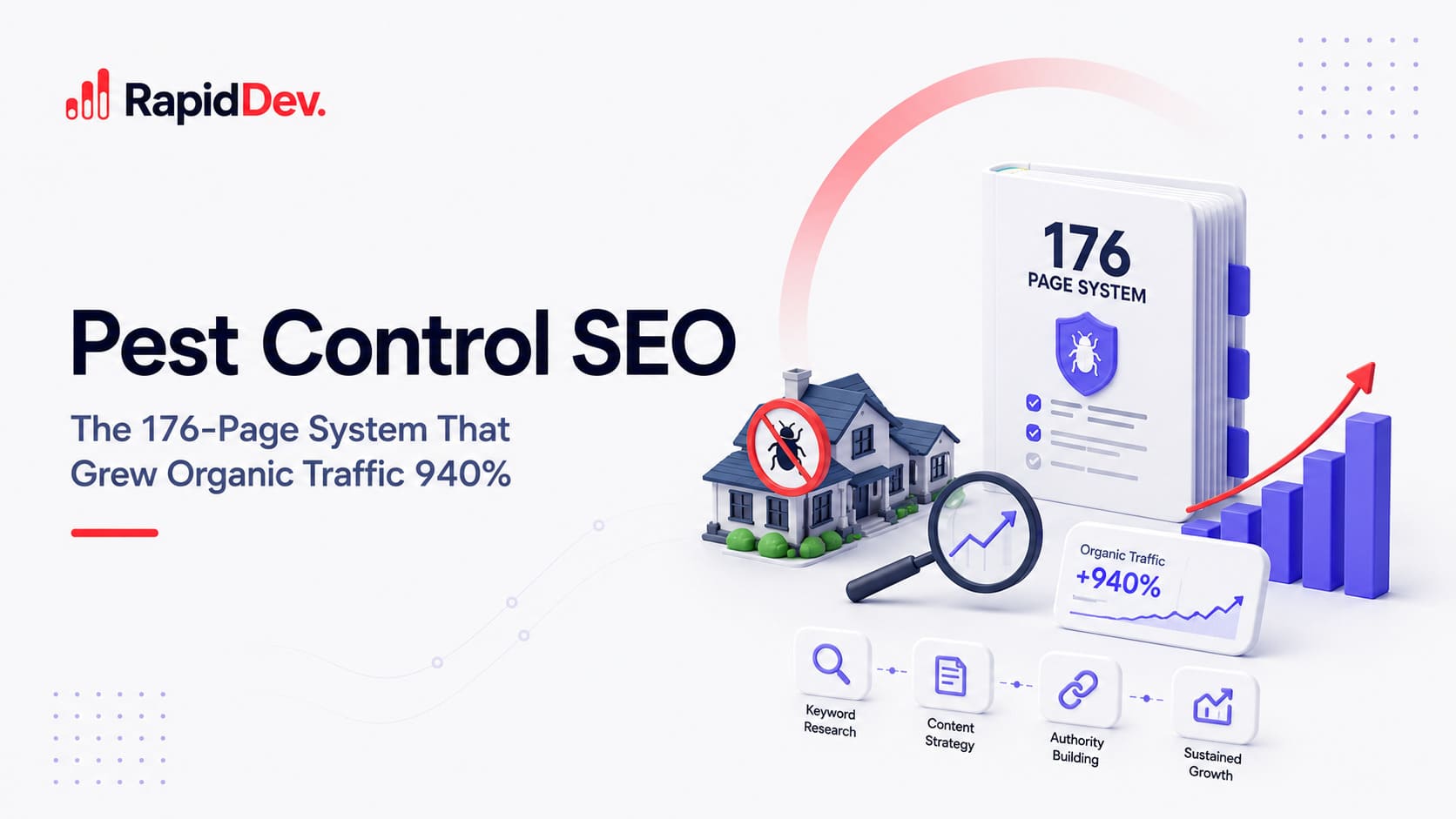
Over eight months, the company increased organic traffic from roughly 750 monthly visits to 7,790. Organic growth reached 940%, and the website began generating 21 to 25 qualified leads every week. Today, 97% of organic traffic comes from content created during the campaign.
The results didn't come from a website redesign or a handful of blog posts. They came from a structured SEO system built around the questions customers were already asking.
If you're running a pest control company and wondering whether SEO can compete with paid advertising, this case study shows exactly what happened, what was built, and what lessons apply to other service-area businesses.
Why Is Pest Control SEO Different?
Homeowners search for specific problems, not general services. They want answers to questions like:
- Is pest control safe for pets?
- Why does my house smell like mice?
- How do I get rid of fleas?
- What attracts termites?
- Why are mosquitoes worse this year?
Each question represents a potential customer.
The challenge is that demand is spread across thousands of searches. Most pest control websites only target a small fraction of them.
Trust also matters. Homeowners often research a problem before deciding who to call. Companies that consistently appear throughout that research process have a significant advantage.
Where Did Anchorpest Start?
Like many local service businesses, Anchorpest Services depended heavily on paid marketing.
Organic search traffic was limited. Most website visitors landed on just two pages, and fewer than 250 organic visits were arriving each week.
The company was running a Google Ads campaign targeting the Manchester service area, but the campaign wasn't creating any long-term asset. Every lead required additional ad spend.
There was also very little visibility into performance.
The team couldn't reliably connect website traffic to phone calls, contact forms, or booked jobs. They knew marketing was generating activity, but they couldn't clearly measure which efforts were producing revenue.
How Did Anchorpest Services Find More Search Opportunities?
The starting point wasn't keyword research.
It was customer behavior.
The team looked at the questions customers were already asking through phone calls, service requests, and everyday conversations with technicians.
The same topics appeared repeatedly.
Customers wanted information about safety, rodents, fleas, mosquitoes, termites, prevention methods, and seasonal pest activity. Those recurring questions became the foundation of the content strategy.
Instead of creating content around broad keywords, the campaign focused on building resources around specific customer concerns.
What Were the Nine Topic Clusters?
The campaign focused on nine areas that consistently generated demand.
- Safety for Pets
- Questions about treatment safety were among the most common concerns homeowners raised before scheduling service.
- Mice and Rats FAQ
- Rodent-related searches represented one of the largest traffic opportunities in the entire campaign.
- Smell FAQ
- Homeowners frequently searched for explanations behind unusual odors, particularly odors associated with rodent activity.
- Ticks and Fleas
- Seasonal infestations created consistent search demand throughout the year.
- Termite and Mite
- Many homeowners searched for early warning signs, treatment options, and prevention advice.
- Pet Parasite Prevention
- Pet owners often looked for ways to protect animals from fleas, ticks, and related pests.
- Mosquitoes
- Mosquito activity generated strong seasonal search volume and high homeowner interest.
- Fall Invaders
- As temperatures dropped, searches increased around pests entering homes during colder months.
- DIY Methods
- Homeowners searched for do-it-yourself solutions before eventually deciding they needed professional help.
Together, these nine clusters covered a large portion of the questions potential customers were already searching for online.
For pest control owners trying to identify opportunities in their own market, customer conversations are often the best source of content ideas. Call logs, service tickets, and seasonal trends usually reveal exactly what people are searching for.
What Did the SEO Build Actually Include?
The content system eventually grew to more than 176 pages.
Each page was designed to answer a specific question or address a specific concern. Instead of publishing generic blog articles, the goal was to create useful resources that matched real search intent.
The approach was similar to the healthcare programmatic SEO system RapidDev built for Curex.
In both cases, success came from building content around large groups of related searches rather than relying on a small number of high-volume keywords.
But content was only part of the work.
A significant amount of time was spent on improvements that most business owners never see.
Broken links were fixed. Technical issues were resolved. Page descriptions were rewritten to improve click-through rates from search results.
The team also replaced generic stock photography with photos of Anchorpest's actual team across service pages and Areas We Serve content. This helped strengthen trust and create a more authentic experience for visitors.
None of these changes are particularly exciting on their own.
Together, they created a stronger foundation that allowed the content strategy to perform.
How Did Anchorpest Services Turn SEO Into a Lead Generation Channel?
By tracking what actually mattered.
Traffic is useful, but traffic doesn't pay the bills. Leads do.
One of the first priorities was building a system that could connect website activity to real business outcomes. Call tracking and form tracking were put in place so the team could see exactly how visitors were interacting with the site and which pages were driving inquiries.
The results changed the conversation.
Instead of reporting rankings and traffic numbers, the business could measure how many potential customers were reaching out each week.
By April 2026, organic traffic was converting at roughly 10%. That translated into 21 to 25 leads every week from organic search alone.
For many pest control companies, that's where the biggest opportunity exists.
They know the phone rings, but they can't tell whether calls came from Google Ads, SEO, Local Services Ads, referrals, or another source. Without attribution, it's difficult to know where to invest.
Once lead tracking was in place, SEO became a measurable acquisition channel instead of a marketing expense.
What Did Growth Look Like Month by Month?
The most interesting part of the campaign wasn't the final traffic number.
It was the fact that growth continued accelerating.
Many SEO campaigns show early gains and then level off. That didn't happen here.
From August 2025 through April 2026, organic traffic increased from approximately 750 monthly visits to 7,790.
That represents a 940% increase in less than a year.
Even more impressive, March 2026 became the strongest month of the campaign, delivering 44.5% month-over-month growth.
Instead of plateauing, the content system continued gaining momentum as more pages ranked and more search demand was captured.
A few examples show the scale of the results:
Mice and Rats FAQ
This became the top-performing content cluster.
In March 2026 alone, the Mice and Rats FAQ generated 2,588 visits.
Pet Safety Content
Questions about treatment safety consistently attracted homeowners researching pest control options.
The Pet Safety page generated 1,490 visits overall and recorded a peak week of 440 visits.
What Can Pest Control Companies Learn From This Campaign?
The biggest takeaway is simple.
Most pest control companies have far more search demand available than they realize.
Homeowners ask questions every day about rodents, termites, fleas, mosquitoes, pet safety, prevention methods, and seasonal pest activity. Every one of those questions creates an opportunity to earn visibility before a competitor does.
The companies that win organic search aren't necessarily producing more content.
They're producing content that directly matches what customers want to know.
Anchorpest didn't grow because of a clever SEO trick.
The company grew because it systematically answered the questions potential customers were already asking.
FAQs
How Long Does Pest Control SEO Take?
Most pest control SEO campaigns require several months before meaningful results appear.
Anchorpest achieved its growth over an eight-month period. The key is building enough content and authority to create momentum. SEO is rarely immediate, but the results tend to compound over time.
How Much Does Pest Control SEO Cost Compared to Ads?
According to SEO.com, many businesses invest between $1,500 and $5,000 per month in SEO services.
The difference is that SEO creates long-term assets. Paid advertising stops producing leads when the budget stops. Well-performing SEO content can continue generating traffic and leads for years.
Will SEO Work in a Small Service Area?
Yes.
In fact, smaller service areas often have less competition.
The key is understanding the questions local customers ask and building content around those topics. Search demand exists in almost every market, even if the total audience is smaller.
Should I Hire a Pest Control SEO Agency or a General SEO Agency?
It depends on experience and results.
Industry knowledge can be valuable, but the most important factor is whether an agency understands how homeowners search, how local service businesses generate leads, and how to connect traffic to revenue.
A strong SEO strategy should produce measurable business outcomes, not just rankings.