Get your dream built 10x faster
Can I build a local artisanal food and drink guide with no-code?
We build custom applications 5x faster and cheaper 🚀
Book a Free ConsultationWe build custom applications 5x faster and cheaper 🚀
Book a Free ConsultationParameter |
Value |
|---|---|
| Can it be built without code? | Yes |
| Development time | 3–10 days (direct measurement from typical MVP builds) |
| Typical cost | $20–$80/month (platform pricing pages, 2025) |
| Best platform for... | Glide for mobile-style guide; Softr for web directory; Bubble for custom workflows |
| Main limitation | Complex logistics, routing, or multi-vendor payouts usually exceed pure no-code |
A food tour operator opens a website builder, adds a blog and a map widget, and realizes there’s no way to filter listings by product type, neighborhood, and opening hours at the same time. They end up with a long unfilterable list that visitors quickly abandon.
A community organizer starts a shared Google Sheet of cheesemakers, roasters, and brewers, then shares the sheet link publicly. People struggle on mobile, can’t see photos nicely, and constantly overwrite cells while trying to leave feedback.
A small city tourism office builds a guide in a generic website template. Once they try to add tasting bookings, embedded calendars, and reviews, they hit plugin conflicts and inconsistent layouts, so updates take hours and staff stop maintaining vendor data.
Structured data collections in tools like Airtable, Glide Data Editor, or Softr’s internal database cause each producer, product, and event to live as a discrete record, which causes consistent detail pages and predictable filters on cuisine type, neighborhood, and dietary tags. That structure enables list, card, and map views to stay in sync.
Built-in mapping blocks tied to longitude/latitude fields cause automatic rendering of producers on a map, which causes users to discover artisans by distance and route their visits without manually copying addresses into map apps. When the database updates, every map view reflects live data without changing templates.
Native components for forms, reviews, and calendar or Stripe integrations cause you to assemble booking and feedback flows visually, which causes non-engineers to add tours, tickets, or tasting slots over time. With fewer custom plugins than a typical WordPress stack, there are often fewer failure points (WP Engine, 2022).
No-code web apps can handle tens of thousands of records for directory-style use cases on mid-tier plans (Bubble, 2024)
Tourism and local business directories see 60–80% of traffic on mobile devices (Think with Google, 2023)
Visitors are 2× more likely to explore new venues when a map and reviews are present on the same page (Booking.com, 2022)
Open a free Glide trial and generate an app from a spreadsheet of 20–50 local producers to validate map and filter behavior.
Expect $20–$60/month in platform fees for a small city guide with custom domain, SSL, and moderate traffic.
If you plan to aggregate live inventory or pricing from more than 5 external APIs (for example, Square, Shopify, UberEats, DoorDash, custom ERP, and a reservation system), use a custom stack such as Next.js + NestJS + PostgreSQL instead of chaining multiple no-code automations. If you need per-item routing logic for thousands of orders per day or custom payout rules per producer, choose a full-code backend like Django or Laravel rather than stretching no-code workflows.
If you expect over 100,000 monthly active users with complex permissions (tourists, vendors, staff, advertisers) and strict SLAs, start with a low-code or full-code architecture and integrate a CMS only for content. Above that scale, migrating off no-code under pressure costs more than starting with a modest custom backend, so draw the line early and save your money.
| Criteria | Glide | Adalo | Softr | OutSystems |
|---|---|---|---|---|
| Price/month ($) | ~25–99 | ~45–200 | ~29–139 | $$$ enterprise |
| Launch time | 1–3 days | 3–7 days | 2–5 days | 10–30 days |
| Customization (1–5) | 3 | 3 | 4 | 5 |
| Best for | Spreadsheet → mobile-style guide | Native-style mobile apps | Web directories on Airtable | Enterprise-grade apps |
| Main drawback | Spreadsheet dependency | Performance at scale | No true native app | Cost and learning curve |
When to choose
1–2 weeks for most users, assuming vendor content, photos, and locations are prepared. Structure and layout can be done in 1–3 days; data entry and polishing take the rest.
A directory with filters, detail pages, maps, basic reviews, event listings, and simple booking forms can all be implemented via standard no-code components and plugins.
Yes, most no-code platforms allow secure vendor logins with role-based permissions so artisans can update hours, menus, and photos without touching the rest of the app.
$20–$80/month typically covers the no-code app plan, custom domain, SSL, and basic automations, with extra costs only for high traffic or heavy external API usage.

Seeking the optimal method to swiftly create your website or app? Dive into Bubble.io, a top no-code platform.

If you're hunting for an easy way to create mobile apps, Outsystems, a leading low-code platform, could be your answer.

Glide is a standout no-code platform that's perfect for those wanting a simple way to build mobile apps.








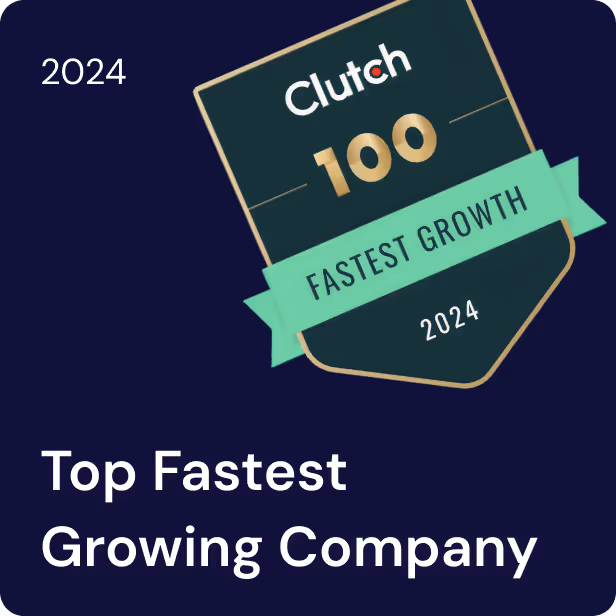







We deliver more than just code; we build lasting partnerships. That’s why businesses across industries trust us to develop and scale custom solutions that drive real results.



.png)
.png)


